Redesign of the company's international payment flows to improve user experience and optimise processing costs.
- Fintech/Web3
- Web & Mobile
- Lead Designer
Context
The challenge
The payment flow, a critical part of Ramp Network's offering, was the convergence point of multiple systems - APIs,pricing, anti-fraud rules, KYC checks etc., which made the UX inherently difficult to get right. On top of that, payment methods and flows varied by country and currency, adding another layer of complexity for users navigating the on and off-ramp process. A full front-end rewrite of the product was a chance to fix core pain points in the user's journey and reduce operating costs.
The organisation
Ramp Network is a Web3 scale-up that processes fiat <> crypto transactions for leading crypto wallets. In 2024 the company pivoted from B2B2C to a B2C model, with launching their own crypto wallet and mobile app. I joined the company in a dual role - UX Designer & User Research Lead, to help build a streamlined consumer experience.
Goals
- Analyse legacy payment flows in detail to understand the most key friction points for users.
- Redesign multiple payment and payout flows following a complete front-end rewrite, while balancing the impact on implementation effort from the engineering team.
- Optimise for a higher conversion rate, higher acceptance rates and lower processing costs across various payment methods.
- Educate team members, coach them in their first research studies and encourage to run studies on their own.
Ramp Network's core business is payments, which often meant designing the flows from scratch rather than layering a 3rd-party processor on top
Card payment flow
By identifying and removing unnecessary steps, I simplified the experience and made it easier for users to complete their purchase without getting lost along the way.
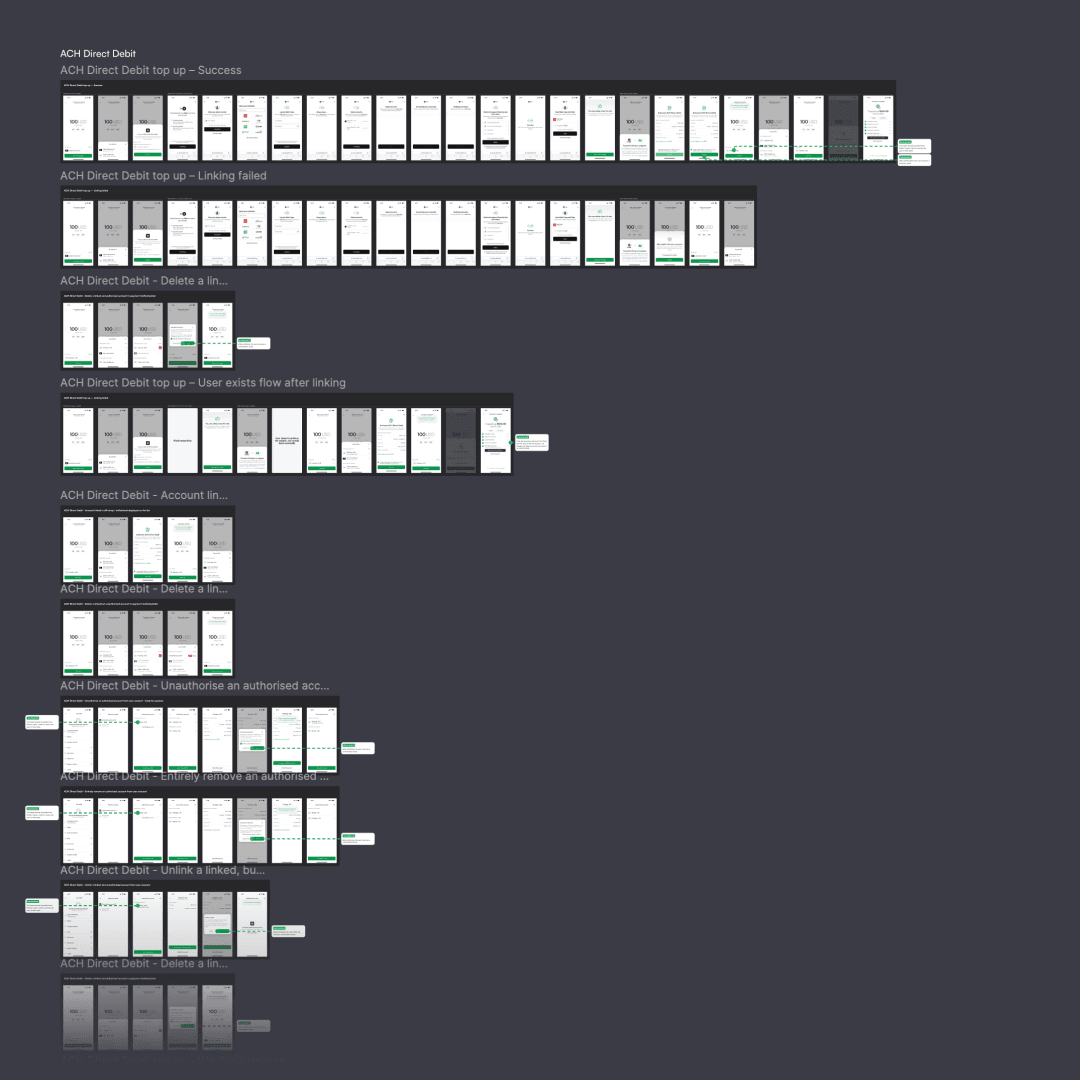
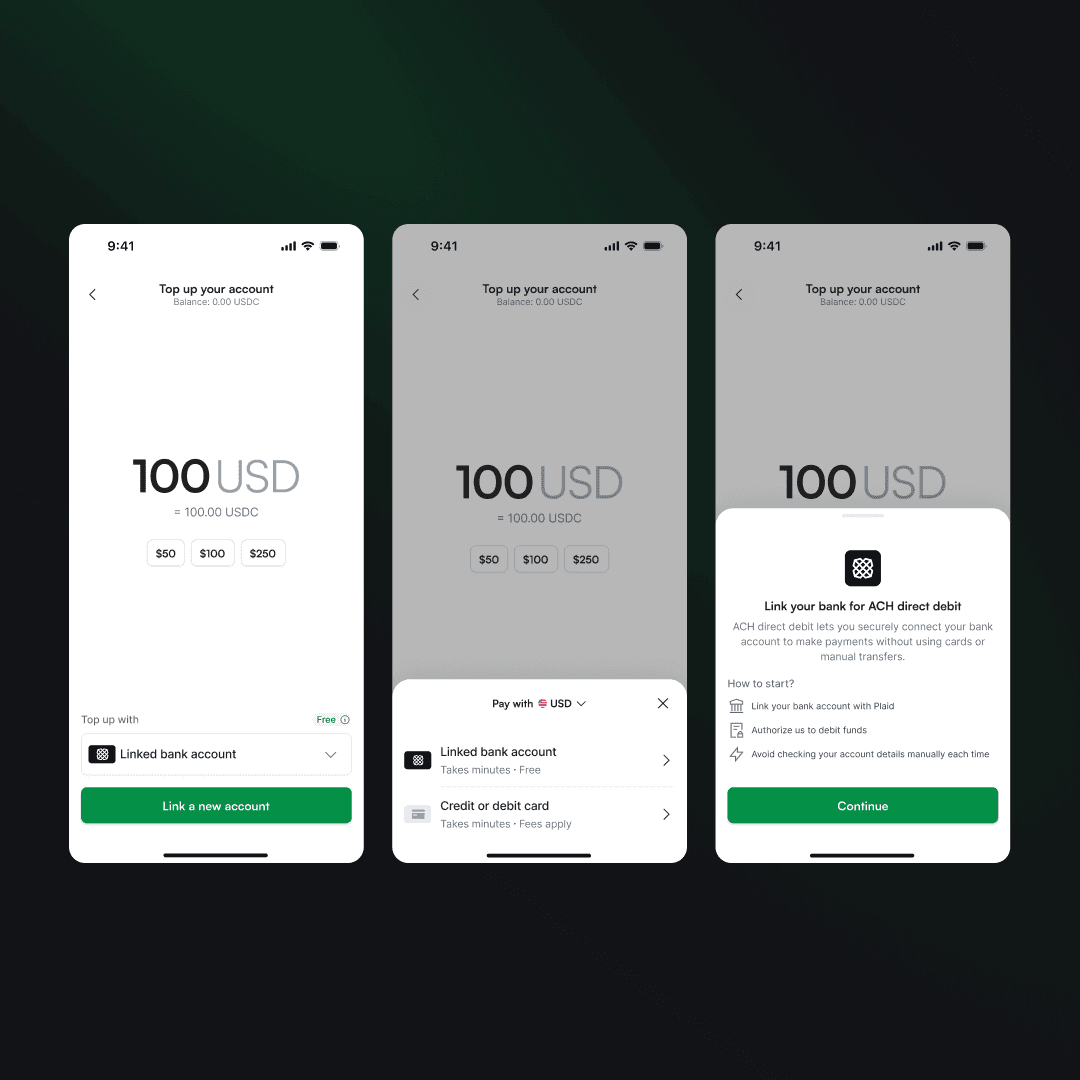
ACH linked accounts
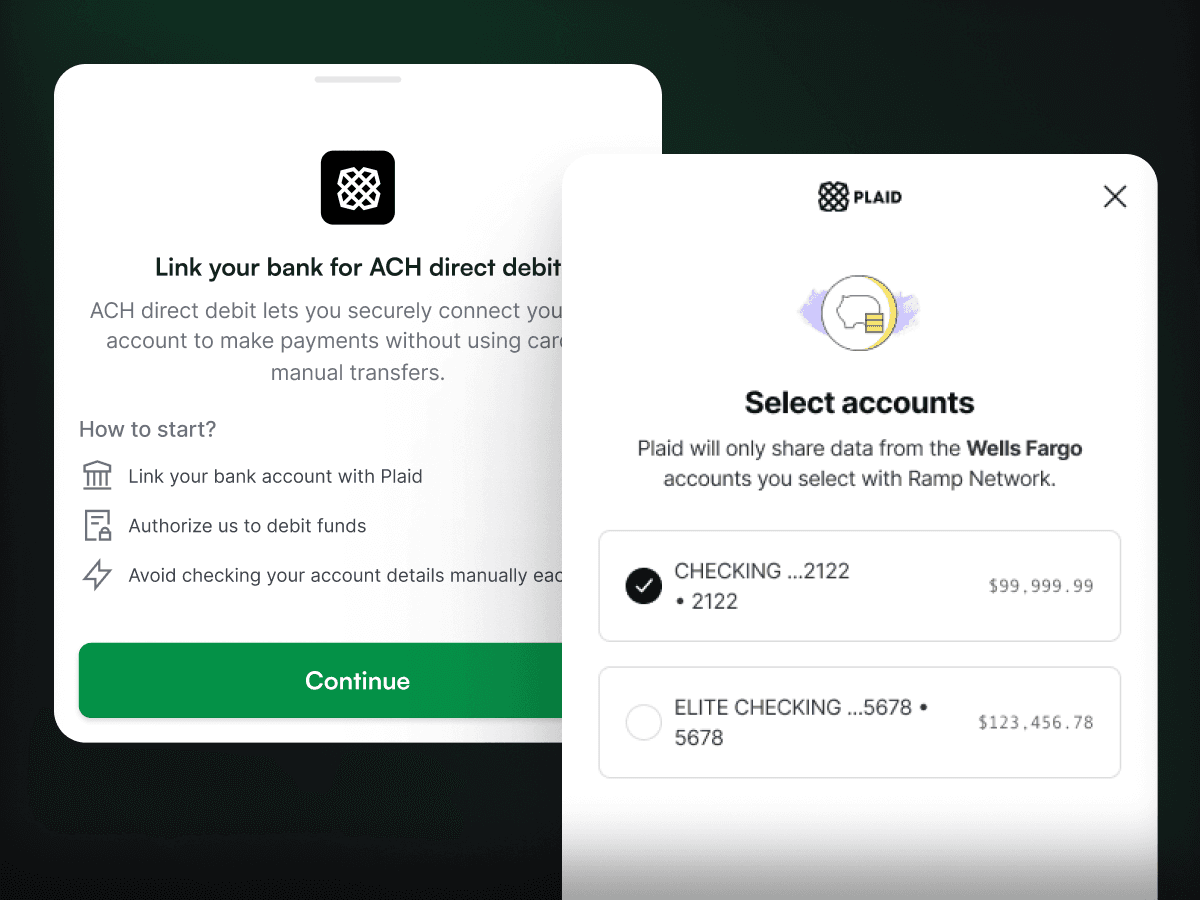
In order to serve US-based customers well, I needed to balance using an external provider (Plaid) and ensuring users understood the notion of linking a bank account for direct debit.
Alternative payment methods
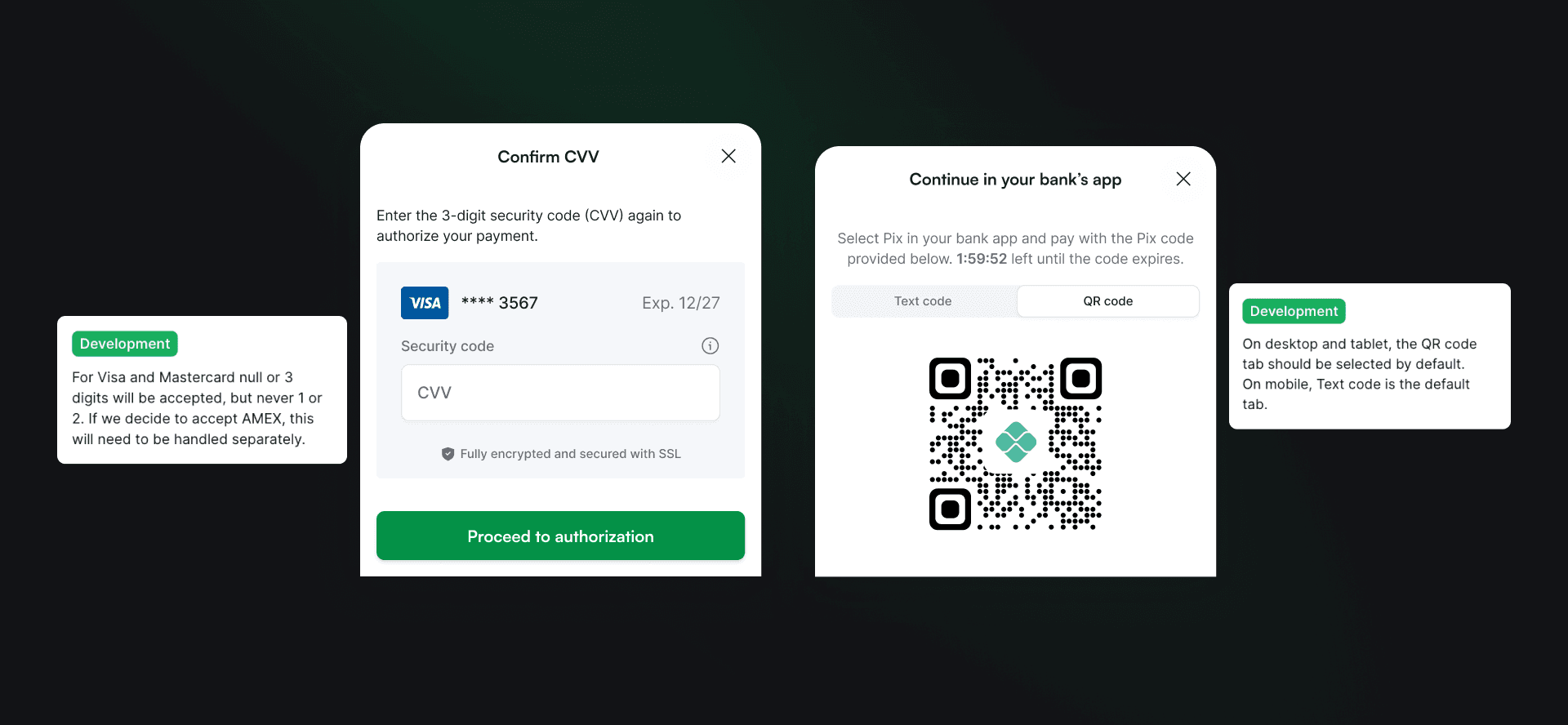
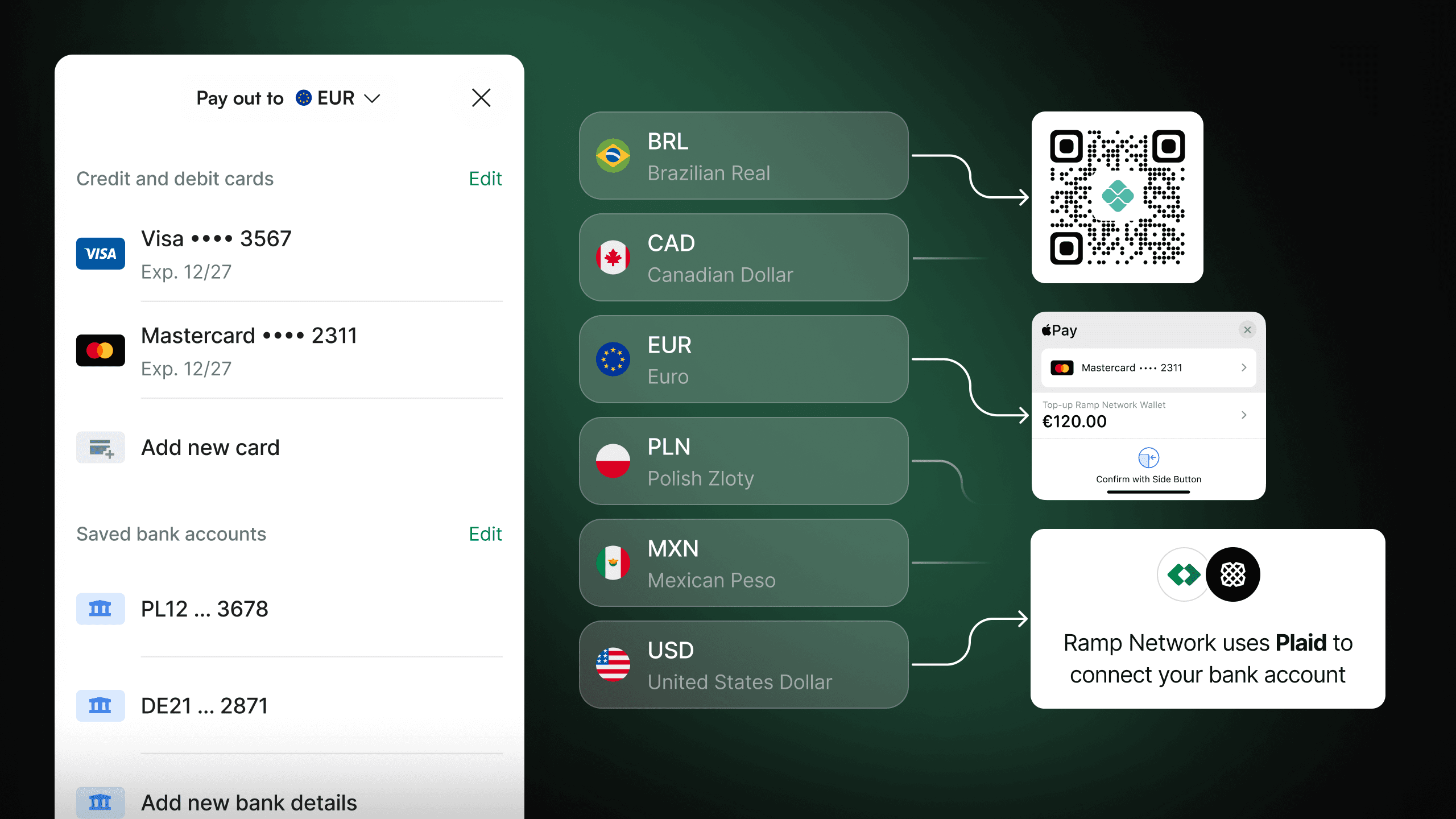
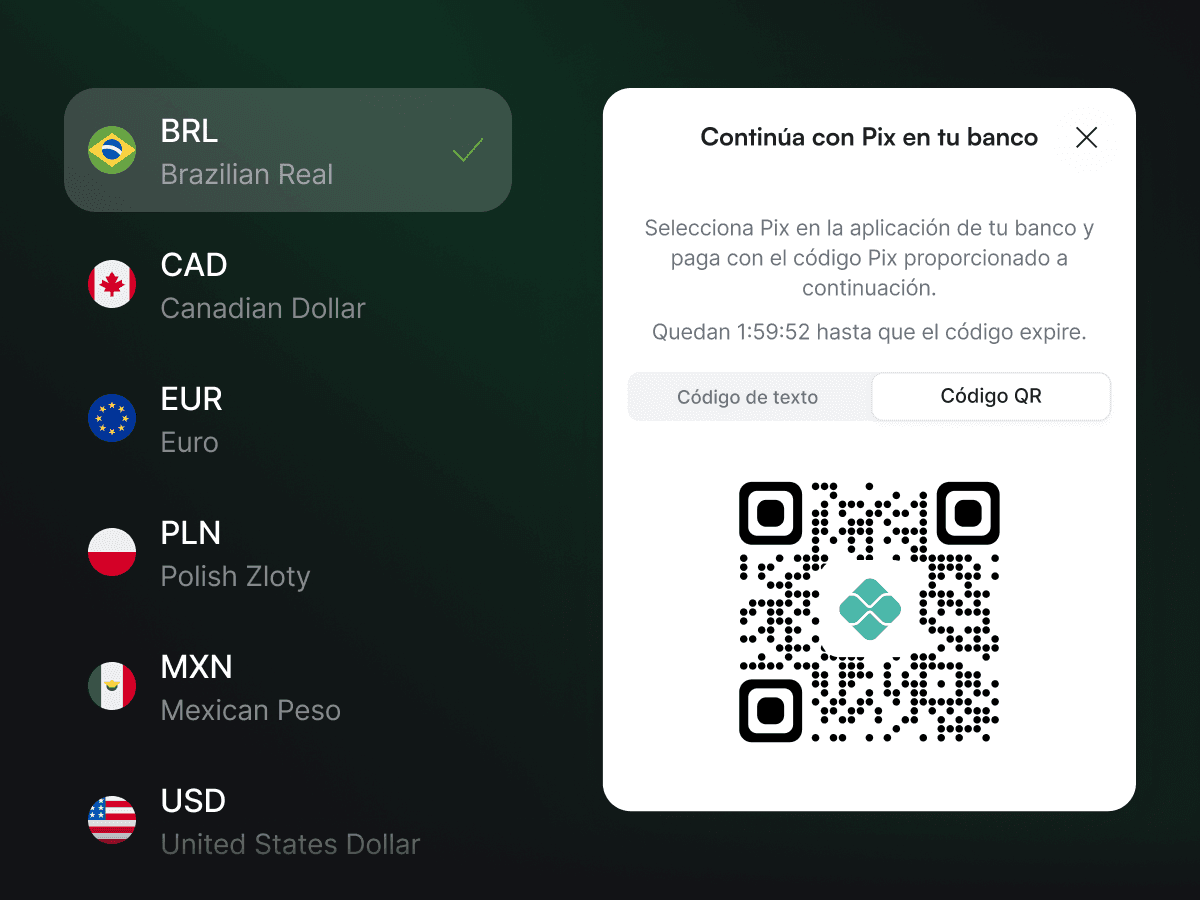
Alternative methods like Pix, SPEI, and Open Banking required tailored flows that felt familiar to local users whilst keeping the overall experience consistent.
Payment method selection
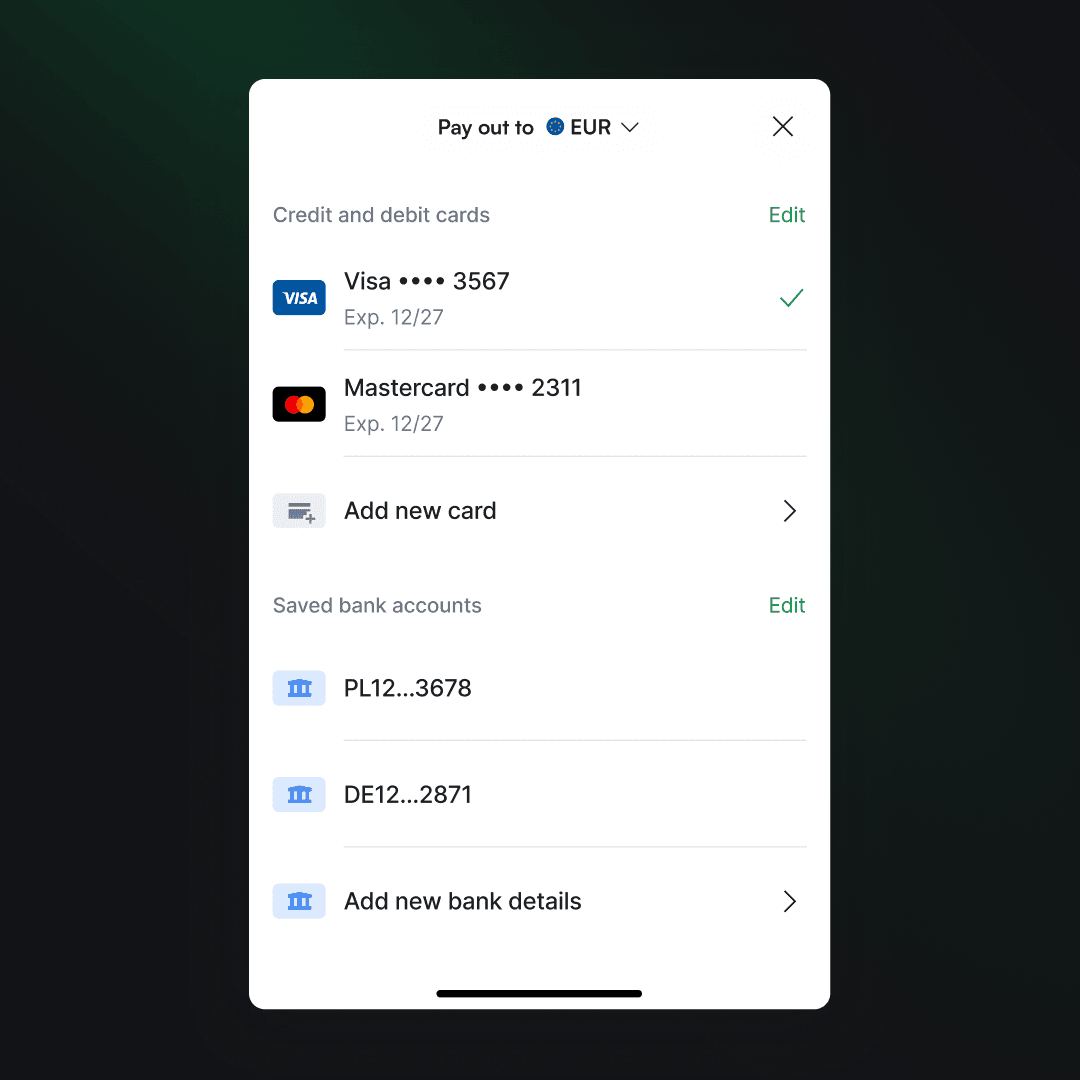
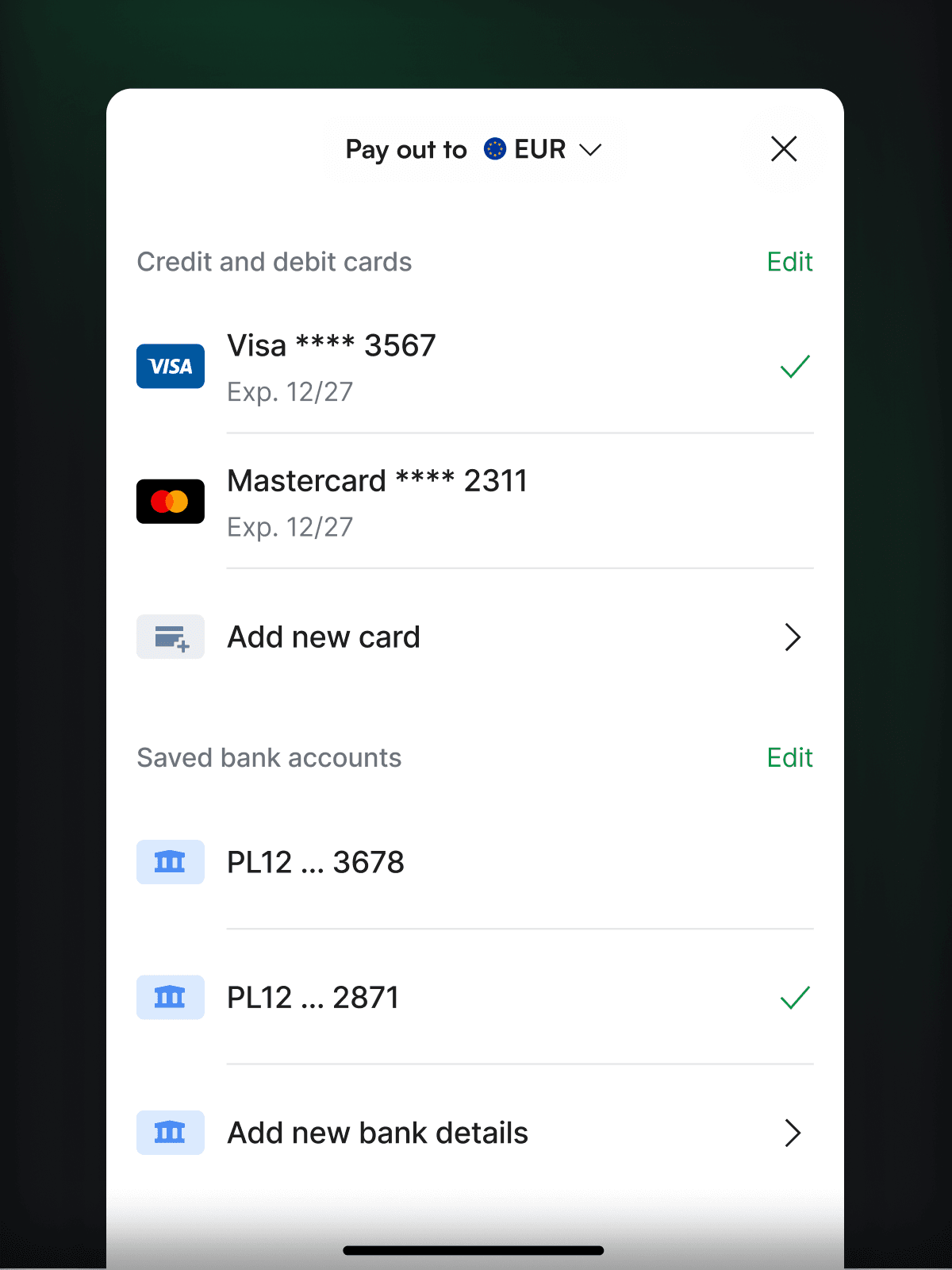
Selecting the right method is a small but critical step, often overlooked. My designs incorporated tens of variants of the list — with saved methods and local availability. I needed to minimise friction where it's easiest to lose users.
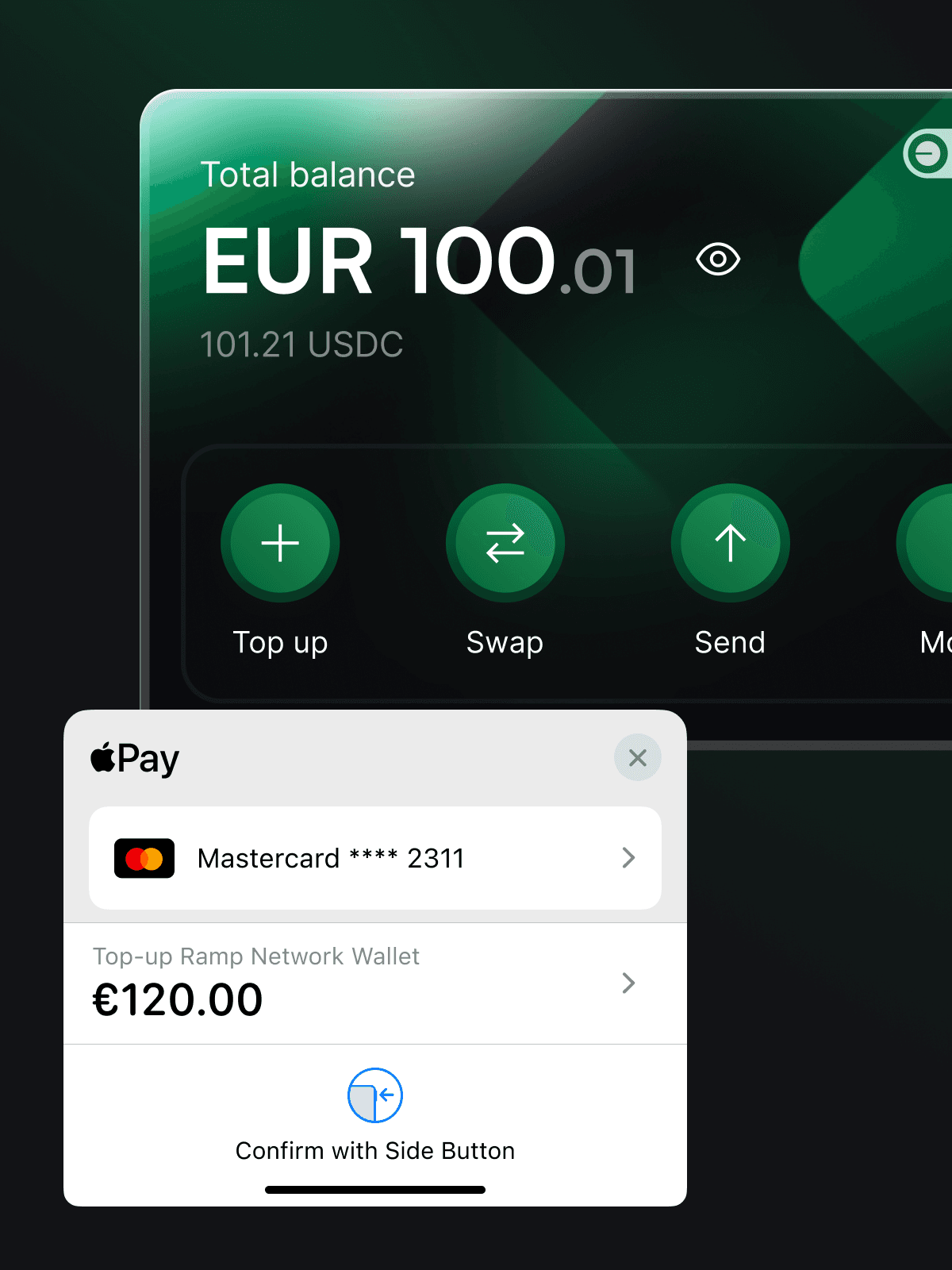
Quick wallet top-up
Since Ramp Network's own USDC wallet was launched in 2025, I was tasked with designing a streamlined experience of topping up the balance. This moment was critical — it unlocked all other wallet features for our users.
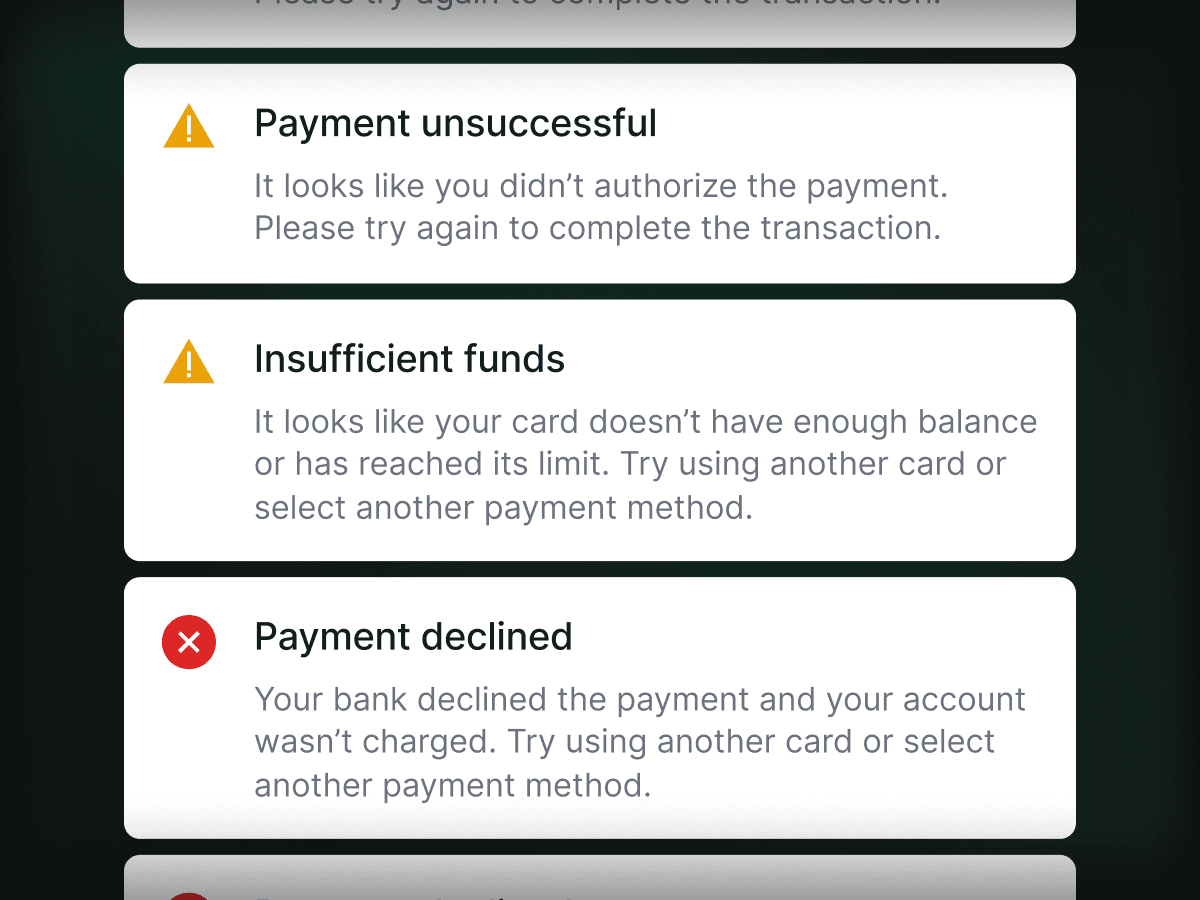
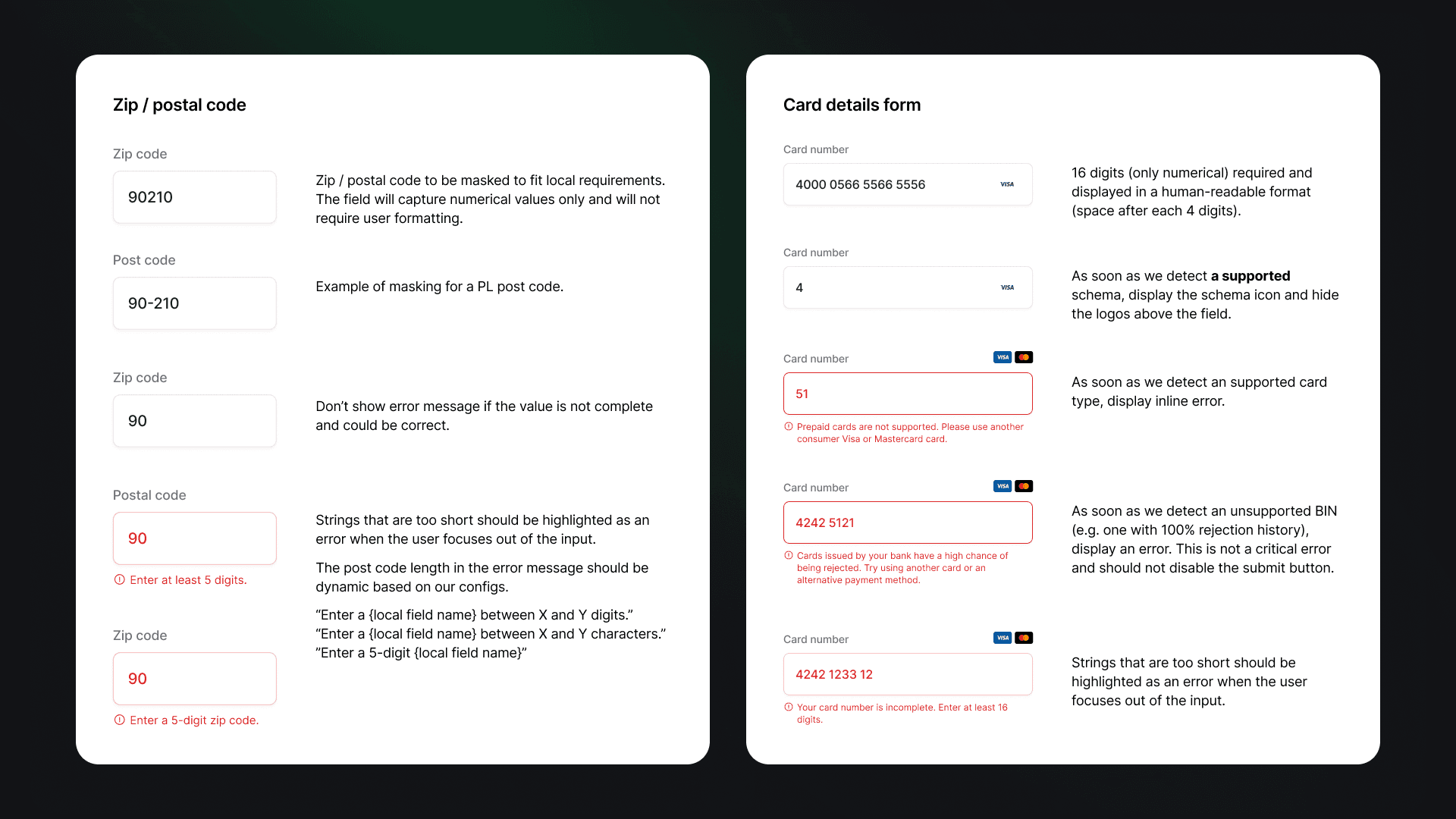
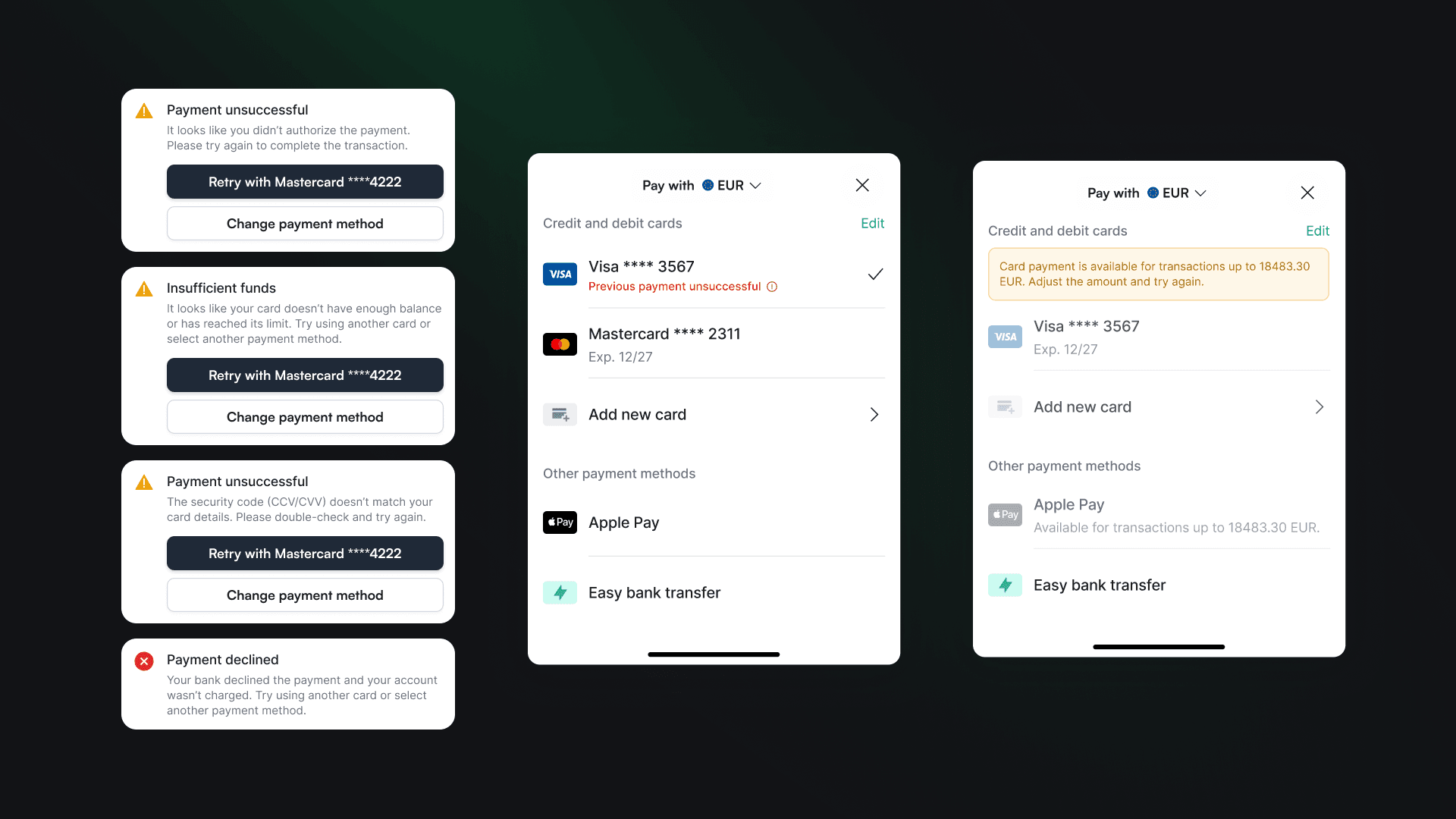
Precise error handling
Every single payment and payout method required various verifications and could eventually fail. Through careful UX writing, I translated technical error codes to actionable, user-friendly messages.
Key Results
- 12
- payment / payout method flows
- 11.6%
- conversion rate increase
- 16%
- of failed payments re-converted
Working with Michał was one of those collaborations that just clicks from day one. He’s open to feedback and genuinely focused on finding the best solution. He’s also a mature, highly effective communicator and I really appreciate the way he presents ideas as you instantly feel smarter after talking to him. Michał did strong work optimizing payment processes, digging into edge cases and the real-world complexity of strictly regulated financial flows.
Process highlights

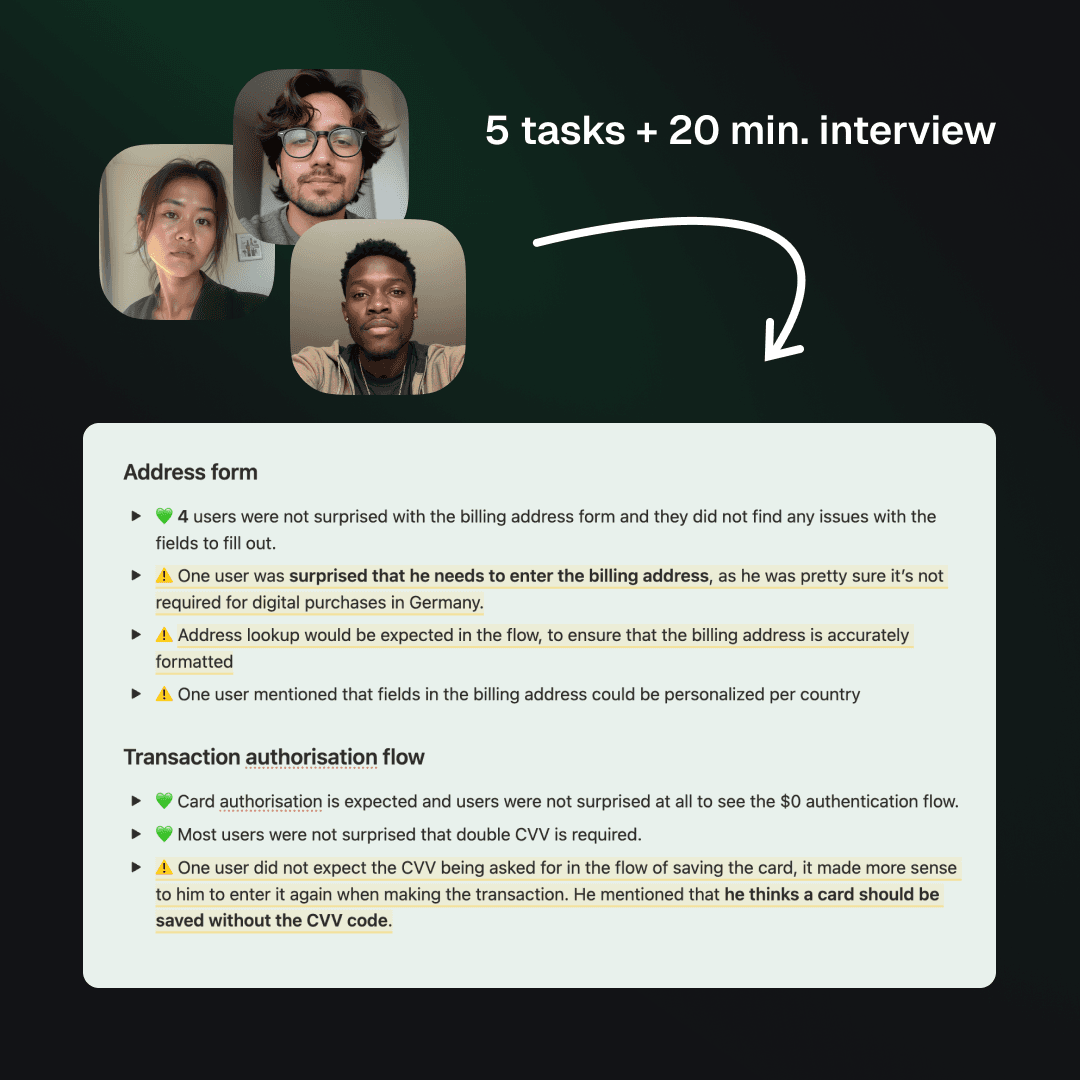
Detailed audits and user testing
At the start of my work in Ramp Network payments, I gathered all known feedback and thoroughly audited the flows. Rigorous testing of the crucial journeys I designed allowed to uncover usability issues quickly, before they made it to production.
Users were confused by error messages when their transactions were declined. The key information was missing - 'Were any money debited from my account?'
On certain devices, our SDK overlay did not have access to the user's clipboard, which made it difficult to copy bank details.
In Web3, users are used to instant transactions, so being explicit about processing times was crucial to avoid frustration.
User saw error after completing the entire process of adding card details instead of receiving inline errors immediately when entering the details.
Key stakeholder relationships
Some of my design decisions were directly influenced by factors such as customer support capabilities, compliance requirements, payment processing costs or 3rd-party API capabilities. I needed to carefully balance them with your day-to-day good design practices and solving for user needs.
The customer support team provided key insights about the most common pain points with the payment flows.
The compliance team needed to be involved in the design process to ensure that the flows were compliant with the regulations.
Payment processing costs were a key factor in the design process. One example of taking this into account was limiting the number of attempts to add a new payment card.
Since many components and patterns I designed were used as boilerplates for other parts of the product, my collaboration with the Design System and Engineering teams was crucial to ensure consistency and maintainability.

Constant iteration based on user feedback
New releases were carefully reviewed by me in Amplitude reports and observed in user session recordings. From small usability or content tweaks to altering key principles of the product architecture, the changes I proposed were released on a regular basis.
Since I learned that Revolut is a popular bank among crypto users, I recommended surfacing Revolut as a standalone payment method (as opposed to hidden in a generic 'Easy Bank Transfer' button. The change increased the total usage of open banking in our app by ~35%.
I noticed many users were looking to pay for crypto in various currencies, but the product required them to change their preferred currency in their account settings. When I surfaced currency selection directly in the user flow, the feature was used by thousands of users every week.
Google Pay users were not able to easily retry a failed transaction. After I designed the flow to retry their payment, we saw a 12% increase in post-fail conversion rate.
Due to Mexican users failing a bank check when paying out to their bank via SPEI, I redesigned the bank account form. It resulted in a 65% lift in payout acceptance rate.

Getting a local perspective from international users
Since Ramp Network operates in 150+ countries, I made sure to understand perspectives from users in key regions. Banking and payment habits and preferences vary tremendously and our product needed to reflect this.
After running a survey with Brazilian users, we found out that many of them use a separate smartphone for their QR-code-based Pix payments. That lead to displaying a scannable QR code in our mobile experience.
I found out that CPF, the Mexican tax id, was often obtained by immigrants. Previous rules in the product assumed that only users with Mexican ID documents could use our product with CPF and my discovery allowed for more flexibility.
After seeing issues with completion of a generic billing address form, I designed localised versions of the form for all key markets.